As announced by Suruhanjaya Tenaga on 31 Dec 2025:
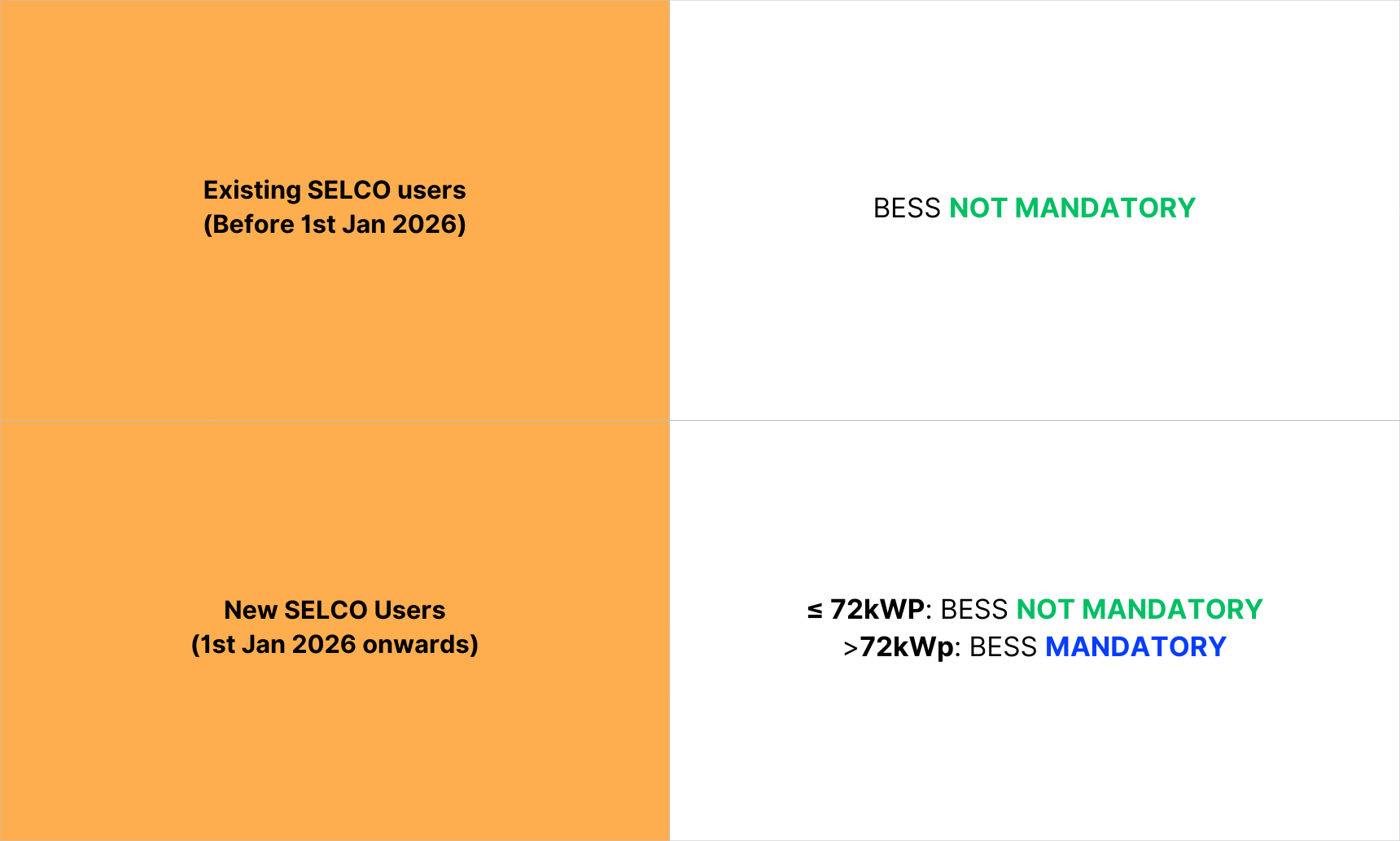
BESS is now mandatory only for SELCO installations exceeding 1 MWac. Previously, the requirement applied to systems above 72 kWp.
SELCO Malaysia • BESS Malaysia • Solar Malaysia • BESS for System Explained
Starting 1 January 2026, businesses installing solar under SELCO (Self-Consumption Solar) will face an important design update:
Any NEW SELCO installation sized above 1MWac must include a Battery Energy Storage System (BESS).
This has raised a lot of questions among business owners:
- “If I already have more than 1MWac installed, do I need to add BESS?”
- “My load is stable — does the rule still apply?”
- “Why is BESS suddenly required?”
- “Is SELCO still worth it?”
- “Does BESS actually benefit my operations?”
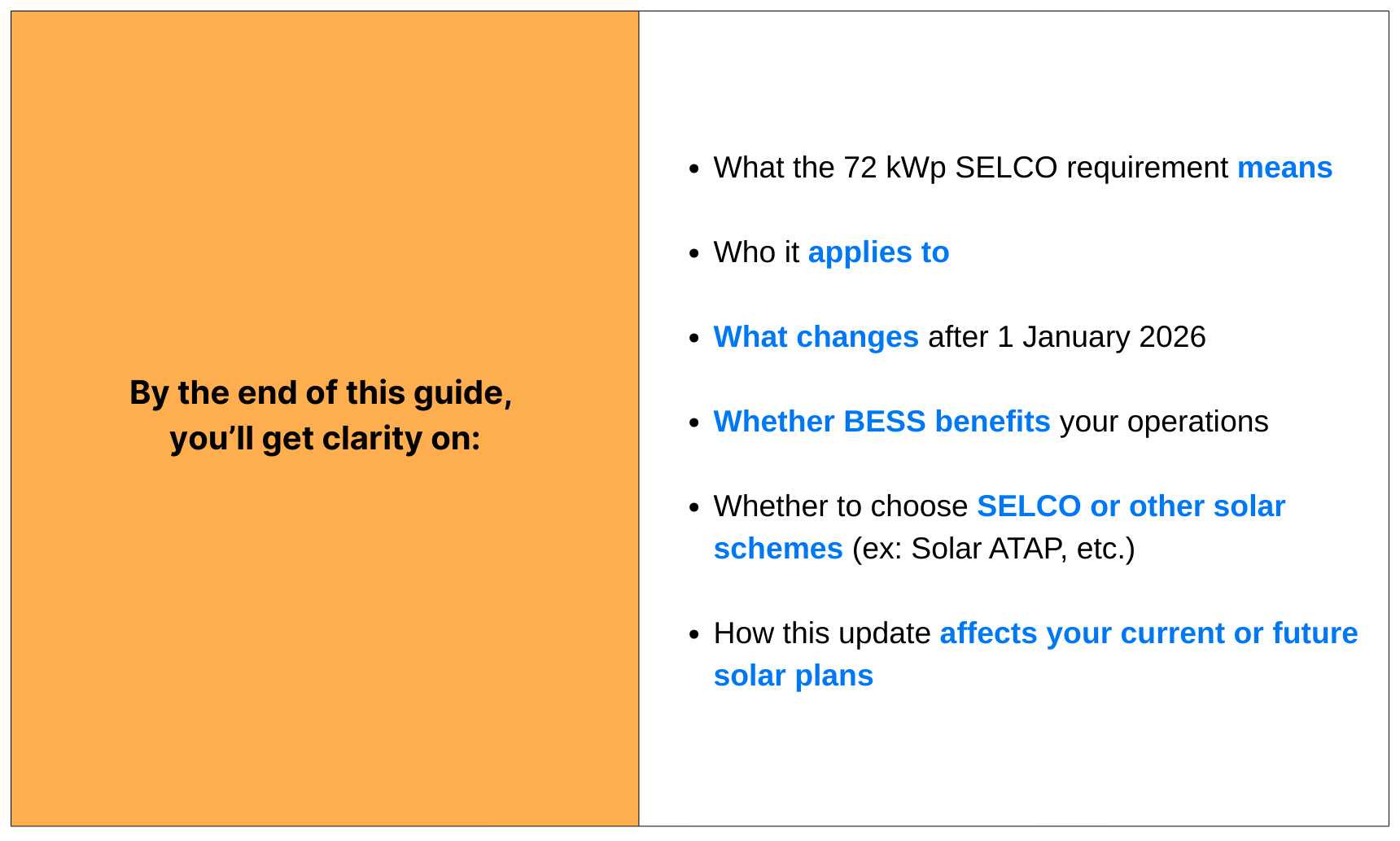
- If you’ve wondered any of these, this guide breaks everything down clearly.
1. What Is SELCO (Self-Consumption Solar)?
SELCO is Malaysia’s solar scheme where:
- solar powers your building directly
- 100% of solar energy generated is used for your building
- Any excess energy cannot be exported back to the TNB grid
So it becomes important to:
- size your system correctly, or
- store the excess energy in a battery energy storage system (BESS)
This makes SELCO great for:
- factories
- warehouses
- malls
- farms
- schools
- commercial buildings
…basically, any site with strong daytime usage.
.png)
2. What Is BESS (Battery Energy Storage System)?
A Battery Energy Storage System is essentially a power bank for your solar system. It:
- stores unused solar during the day
- releases the energy later:
- during peak hours when TNB rates are higher,
- night-time when solar generation is lower, or
- during demand spikes when say, all your equipment is used at the same time
- helps stabilise your building’s energy use
- increases your solar utilisation
- protects you from sudden grid pulls

3. Why Must SELCO users install BESS for systems above 1MWac?
This is not a penalty. It is a design update based on how larger systems behave. When solar systems get bigger (e.g., 100kWp, 500kWp, etc.), they naturally:
- generate MORE solar at midday
- have MORE excess energy
- have MORE ability to reduce peak-hour electricity usage
- have MORE potential to reduce grid reliance
- create MORE opportunities for storage
Bigger solar systems produce more energy — and BESS helps you USE that energy properly. So the guideline simply requires that larger SELCO systems include BESS — not because solar is unstable, but because bigger systems benefit more from managing their energy properly. The bigger the system, the bigger the advantage of having storage.
4. BUT, Do You Actually Need BESS?
This is the biggest point of confusion. Your site may not need a battery, but because of the guidelines, you might need to install one anyway.
Scenario (based on operations):
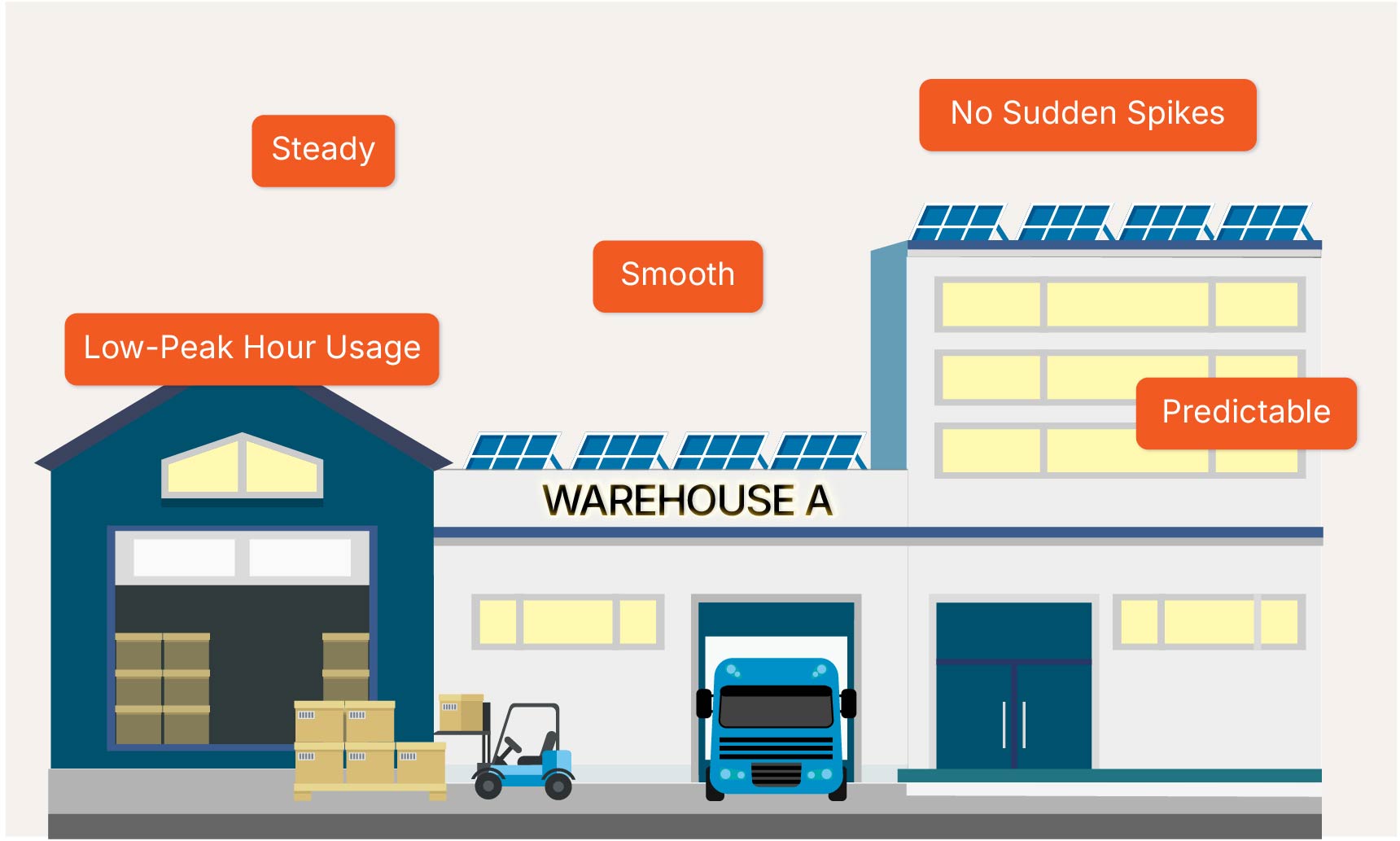
Warehouse Leong (fictional) installs a 150kWp solar system under SELCO before 1 Jan 2026. Their load profile is:
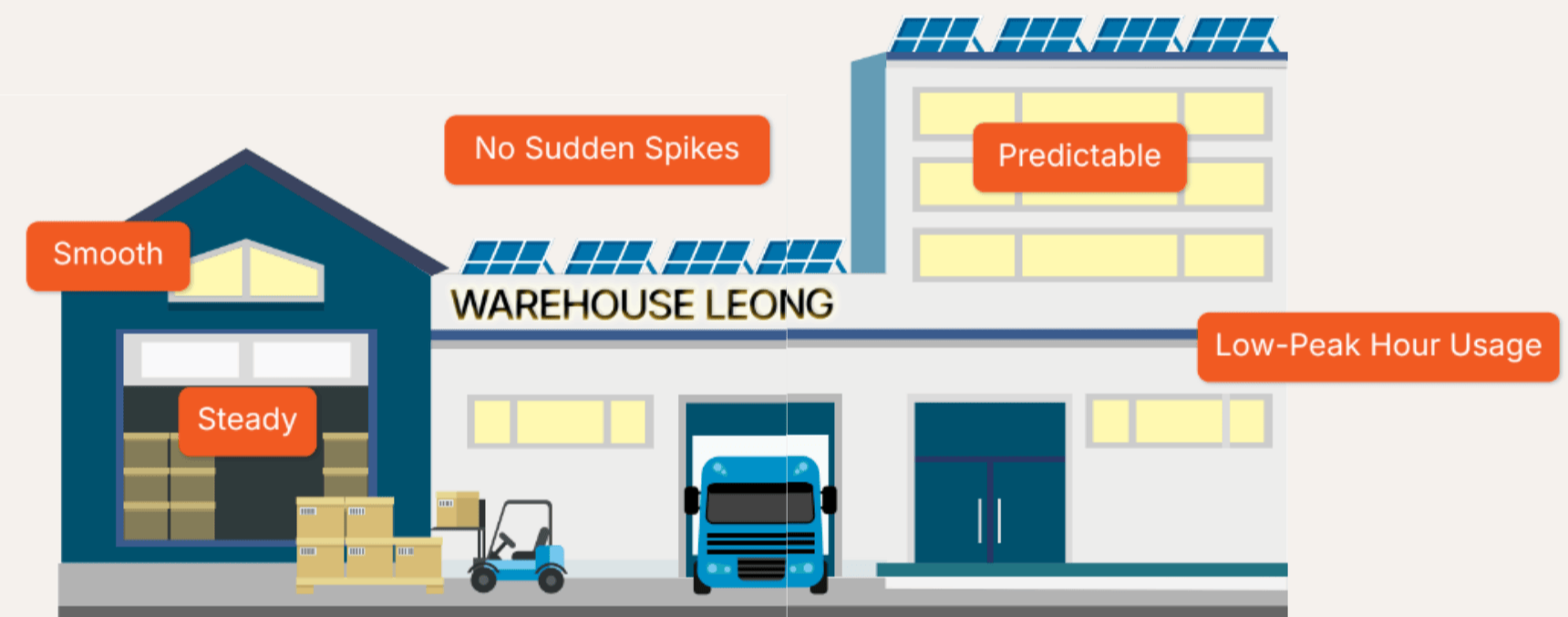
- Solar-only is perfect
- BESS offers little additional value
- ROI is fast and lean
But after 1 Jan 2026
If Warehouse Leong installs a 150kWp solar system, BESS is required, even if their load is perfectly stable.
Two different things — One is technical. One is regulatory. Understanding both helps you make smarter decisions.
.png)
5. When You ACTUALLY Need BESS (Operationally)
BESS adds real value when your operations match two or more of these conditions:
- You use a lot of electricity during peak hours (2pm–10pm).
Stored solar replaces expensive grid electricity — protecting you from higher peak-hour costs. - Your machines create short but high-power spikes.
Motors, compressors and chillers can cause sudden surges. A battery smooths these spikes → lowering TNB Capacity & Network Charges. - Your system produces more solar than you use at noon.
Under SELCO, you cannot export excess energy. BESS stores that excess solar energy so you can use it later instead of letting it go to waste. - Your operations run into the evening or night.
Solar slows down after 7pm. BESS extends your solar benefits after sunset — supporting equipment that must run late. - You want stable, more predictable TNB bills.
A battery stabilises your load profile, reduces volatility, and supports sensitive machinery during voltage dips.
6. What does this really mean for your solar decision in 2026?
This mandatory BESS requirement for solar systems above 1MWac doesn’t reduce the value of solar and isn’t a signal to avoid solar — it’s a reminder to choose the right pathway for your operations. It simply shifts how larger SELCO systems are designed — giving businesses the chance to use more of their solar, smoothen peak-hour patterns, and future-proof their energy strategy as Malaysia moves toward higher renewable adoption.
Here’s the practical takeaway:
- Larger solar systems still offer great long-term savings
- BESS helps you use more of the energy you generate
- Your overall energy becomes more stable and predictable
- You align with Malaysia’s long-term renewable direction
BESS isn’t an add-on for the sake of it. For bigger systems where the load benefits from BESS, it becomes the tool that helps you capture solar value more efficiently — and operate with fewer energy uncertainties.
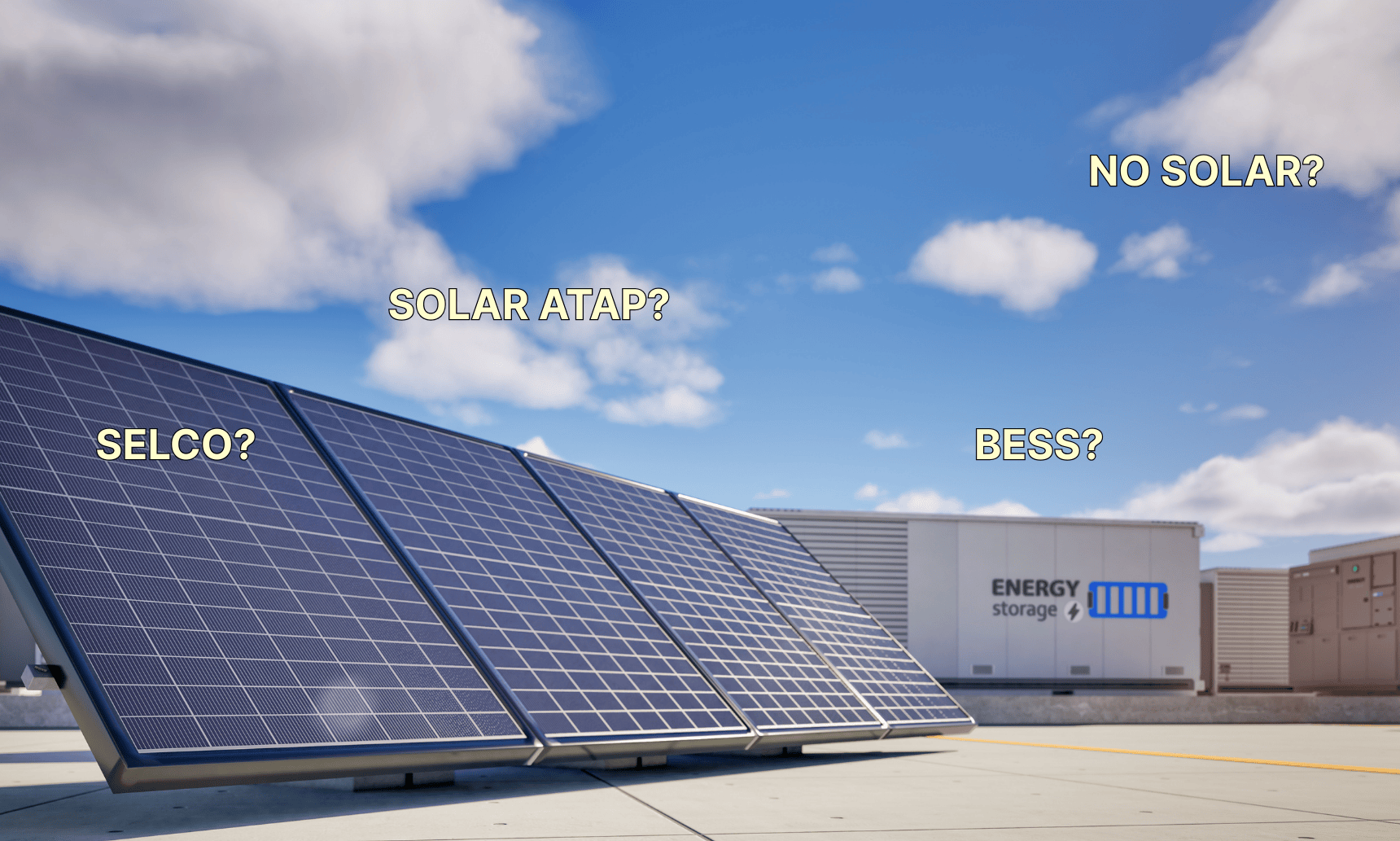
And now, businesses can make clearer decisions:
Energy planning isn’t about following the crowd — it’s about understanding your building, your operations, and your long-term direction. What truly matters is knowing:
- What your load profile needs
- What each solar pathway requires (SELCO, upcoming Solar ATAP)
- Does SELCO (or other schemes) make sense for your 2026 plans?
- Does BESS add real, measurable value to your operations?
- Should you explore other corporate solar mechanisms or green financing?
Whether you’re exploring solar, evaluating if BESS fits your operation, or planning for 2026 and beyond, the goal remains the same:
Choose a solution that supports your operations, aligns with your load behaviour, and delivers sustainable long-term savings.
If you’d like support reviewing your load or comparing SELCO, Solar ATAP, and other mechanisms, our solar energy experts can walk you through it — clearly, transparently, and with zero pressure.
*This article is intended for general informational purposes and does not constitute technical, engineering, financial, or regulatory advice. Solar and BESS requirements may vary depending on site conditions, load behaviour, and updates to government guidelines. Please talk to our energy experts before proceeding.
Helpful reads:
- Official Solar ATAP Guidelines
- Solar ATAP Guidelines simplified
- SELCO: Everything you need to know.
- SELCO or Solar ATAP: Which suits you better?
- What is BESS (Battery Energy Storage System)?
- Latest TNB Tariff Structure Domestic
- Latest TNB Tariff Structure Non-Domestic
- How we maintain your solar system (with pictures)