Recent reports indicate that Malaysians may need to brace for higher electricity prices, driven by rising coal and natural gas costs amid global geopolitical tensions.
At the same time, there is a short-term buffer:
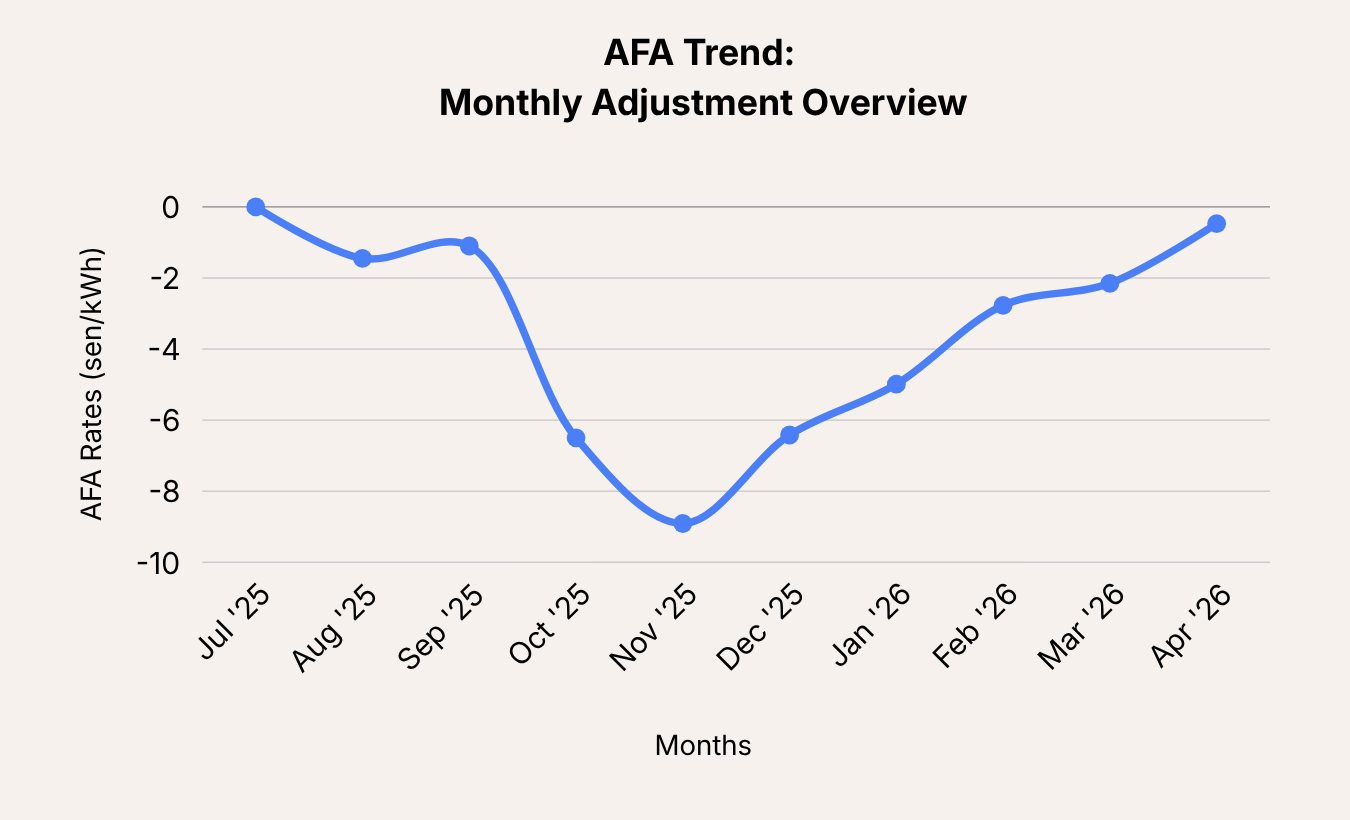
Malaysia’s automatic fuel adjustment mechanism is expected to provide rebates up until July, based on the latest forecast by Tenaga Nasional Bhd.
However, this does not eliminate the underlying trend. It only temporarily softens the impact.
What is AFA and Why Does It Matter?
AFA (Automatic Fuel Adjustment) reflects changes in global fuel costs, particularly natural gas and coal, which are key sources of electricity generation in Malaysia. Both are influenced by broader market conditions and external factors.
This means:
- When global energy prices shift, the impact can gradually flow into electricity costs through AFA.
- The more you rely on grid electricity, the more you are exposed to global fuel price movements.
Even in a regulated tariff environment, cost pressure still exists beneath the surface.
Why Energy Cost Volatility is a Growing Business Risk
Many businesses are focused on supply chain disruptions — including raw material shortages and price fluctuations.
But another risk is quietly building: energy cost volatility.
Unlike supply chains, whichare largely external, energy is one of the few cost components businesses can actively manage.
While rebates are still being applied, the trend shows a clear reduction over time — suggesting that underlying fuel cost pressures are gradually surfacing. Refer to Graph 1: AFA Trend: Monthly Adjustment Overview.
How Solar Energy Reduces Exposure to Fuel Price Fluctuations
Solar energy is no longerjust about sustainability, it is a risk management strategy.
Key benefits:
- Cost stability: Lock in electricity costs for 20–25 years
- Reduced dependency: Lower reliance on gas and coal-driven electricity
- Margin protection: Mitigate rising energy costs
- Better forecasting: Improve long-term financial planning
Supply Chain vs Energy: Why a Parallel Strategy Matters
Businesses cannot control:
- Global trade disruptions
- Commodity price fluctuations
- Geopolitical risks
But they can reduce exposure to energy volatility. The smarter approach:
- Stabilise supply chains
- At the same time, stabilise energy costs
Final Insight
Electricity tariffs may be regulated,and rebates may apply in the short term, but your exposure to global fuel dynamics is not.
Forward-looking businesses arenot just reacting to rising costs, but to build resilience against future uncertainty.
Related Guides &Articles
1. What is the Automatic Fuel Adjustment (AFA) Charge in Your TNB Bill?
2. Malaysians should brace for gradual rise in electricity prices, says Energy Commission
4. Higher electricity costs in April under automatic fuel adjustment